Winter Kungsleden – Solo Expedition
Basic Info
Type: Solo winter expedition
Location: Northern Sweden
Start – End: Hemavan – Abisko
Lenght: aprox. 450km
When: February – March 2027
Duration: Up to 40 days
Transportation: Backcountry ski + pulk
Support: Solo, self-supported, tent based
Terrain: Mountain valleys, frozen lakes, open plateaus and Arctic winter terrain
Introduction
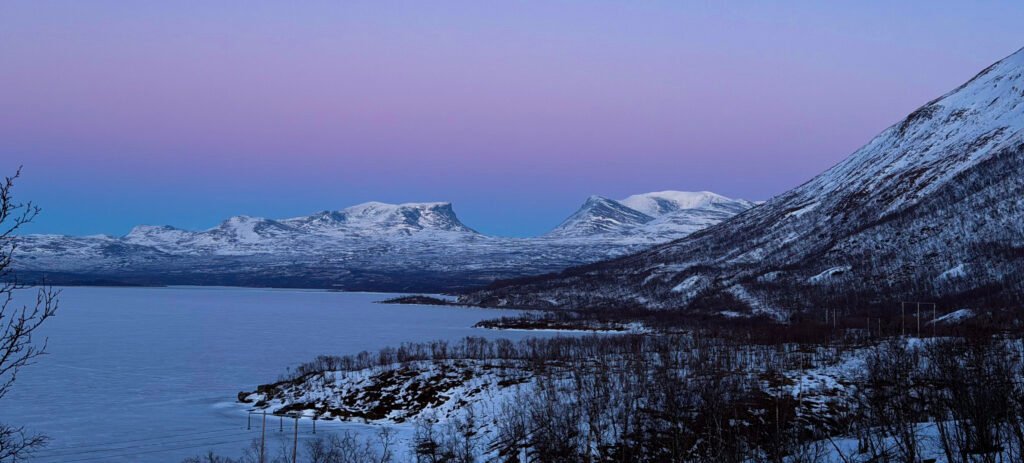
In February 2027, I am planning my first long-distance solo winter ski expedition: a full winter crossing of Kungsleden in northern Sweden, from Hemavan to Abisko.
The route is approximately 450 kilometres long and I expect to spend up to 40 days on the trail, travelling on backcountry skis and pulling my equipment in a pulk. Most of the journey will be self-supported, with a tent as my primary shelter.
Choosing winter is very intentional. I want to experience Kungsleden not as a summer hiking trail, but as a remote Arctic landscape shaped by snow, cold, wind, long nights and constantly changing conditions. The timing also gives me the opportunity to travel beneath the auroral oval — combining the expedition with one of the things that first drew me north in the first place: the northern lights.
The goal is not simply to cover 450 kilometres as quickly as possible. I am planning around approximately 30–35 travelling days, with additional reserve days for weather, rest and logistics. The expedition will be an exercise in self-reliance, decision-making and adapting to the Arctic rather than fighting against it.
Environmental Focus
One of the main goals of the expedition is to observe and document the Arctic winter environment over a long distance and over several weeks of continuous travel.
Moving slowly across approximately 450 kilometres will allow me to experience how snow cover, temperature, wind, visibility and freeze-thaw cycles change from one section of the route to another. I am particularly interested in how these conditions shape the landscape, influence frozen lakes and rivers, affect snow quality and determine how easily — or how safely — it is possible to move through the terrain.
Rather than recording only isolated weather events, I want to follow these changes throughout the entire journey. Daily notes, photographs and video will create a continuous record of the winter conditions I encounter and how they develop over time.
I am also interested in the broader variability of northern winters. Periods of unusually mild weather, rapid temperature changes, unstable snow conditions or repeated thaw and refreezing can have a noticeable impact on both the landscape and the practical reality of travelling through it. Documenting these changes from the perspective of someone moving through the environment every day can add a personal, ground-level view to a much larger environmental story.
A second scientific element of the expedition will focus on the night sky. During clear nights, I plan to document auroral activity and compare what I observe with available space-weather and geomagnetic data, including IMF Bz and Bt, solar wind speed and density, geomagnetic activity and local magnetic-field variations.
I am especially interested in moments when the visible behaviour of the aurora does not seem to match the headline geomagnetic indices — for example, strong local auroral activity during relatively low Kp conditions. Combining photography, field observations and measured data will allow me to explore how the conditions in near-Earth space translate into what is actually visible from the ground.
Together, these observations will create a record of the Arctic environment from two perspectives: the rapidly changing winter landscape beneath me and the dynamic space environment above it.
Why Kungsleden? And why winter?
Kungsleden has been on my mind for a long time, but I never wanted to experience it only as a summer hiking trail. I was drawn to the idea of crossing it in winter, when the landscape becomes quieter, more remote and much more demanding.
The route combines many of the things I am looking for in an expedition: long distances, Arctic conditions, remote mountain terrain and the need to remain self-reliant for days at a time. It is challenging enough to push me beyond what I have done before, while still being a realistic next step toward longer and more demanding polar expeditions.
For me, Kungsleden is not the final goal. It is the next stage in a progression — from road trips, to multi-day hikes, to long winter journeys where preparation, endurance and decision-making matter much more.
The Route
The planned route follows approximately 450 kilometres of Kungsleden through northern Sweden, from Hemavan to Abisko.
I plan to travel on backcountry skis while pulling most of my equipment in a pulk. My tent will be my primary shelter, although mountain huts along parts of the route may provide occasional opportunities to rest, resupply, dry equipment or wait out difficult weather.
The exact daily distances will depend on snow conditions, wind, visibility and terrain. Rather than following a strict schedule, I want to keep enough flexibility to adapt to the conditions and make safe decisions along the way.
I expect the journey to take around 30 to 35 travelling days, with additional reserve days built into the overall plan.
Expedition Goals
The primary goal is to complete the full winter crossing safely and independently.
Beyond the distance itself, I want the expedition to help me develop the skills required for longer and more demanding polar journeys — winter navigation, camp routines, equipment management, decision-making in poor weather, physical endurance and the ability to remain self-sufficient for extended periods.
Another important goal is to document the Arctic winter environment throughout the journey. Over approximately 450 kilometres, I plan to record changes in snow cover, temperature, wind, freeze-thaw conditions and the state of frozen lakes and rivers, creating a continuous ground-level record of the conditions I encounter.
During clear nights, I also plan to document auroral activity and compare my observations with available space-weather and geomagnetic data, including IMF Bz and Bt, solar wind speed and density, geomagnetic activity and local magnetic-field variations. I am particularly interested in moments when the visible behaviour of the aurora does not appear to match the headline geomagnetic indices.
Finally, I want to turn the expedition into an honest visual and written story — documenting not only the landscapes and successful moments, but also the uncertainty, difficult conditions, changing plans and decisions behind a long solo winter journey.
Preparation
Preparing for a multi-week winter expedition means testing much more than physical fitness. I need to know how my equipment, routines and decision-making work together over many consecutive days in cold, wind and snow.
Physical Preparation
My training focuses on endurance, strength and gradually increasing the amount of time I spend moving with weight. I want to arrive at the start of the expedition already comfortable with long days of continuous effort and repeated recovery.
Winter Skills
I am building experience with winter camping, backcountry skiing, navigation, cold-weather routines and managing equipment in snow and low temperatures. The goal is to make as many daily tasks as possible familiar before the expedition begins.
Equipment Testing
Every major piece of equipment needs to be tested as part of a complete system. This includes my sleeping setup, clothing layers, skis, pulk, stove, electronics, power system and emergency equipment. I want to identify weaknesses before they become problems in the field.
Planning & Safety
The route plan includes hut locations, resupply possibilities, emergency communication, weather flexibility and reserve days. I do not want to follow a rigid schedule — conditions will determine how far I travel and when it is safer to stop.
Storytelling & Documentation
Documenting the expedition is an important part of the project. I want to capture not only the landscapes and successful moments, but also what a long solo winter journey actually involves — the preparation, routines, uncertainty, difficult conditions, changing plans and decisions made along the way.
Throughout the expedition, I plan to use photography, video, written field notes and daily observations to create a detailed record of both the journey and the environment around me. This material will also support the environmental and aurora observations collected along the route.
One of the main outcomes of the expedition will be a YouTube documentary, combining the personal story of the crossing with the Arctic environment, winter conditions and the scientific observations made along the way.
I am also planning to develop the journey into a book, using field notes, photography and reflections from the expedition to tell the story in greater depth — from preparation and setbacks to the physical and mental reality of travelling alone through the Arctic winter.
Rather than presenting the expedition only as a series of highlights, I want the final story to show the full reality behind it: the difficult days, mistakes, adaptations, moments of uncertainty and the decisions that ultimately shape the journey.